
Dillygence
Carbon tax for industry: managing taxation, protecting EBITDA
Carbon tax industry: unstable production rates explode your carbon footprint, Operation Optimizer secures your margins through regular flows.
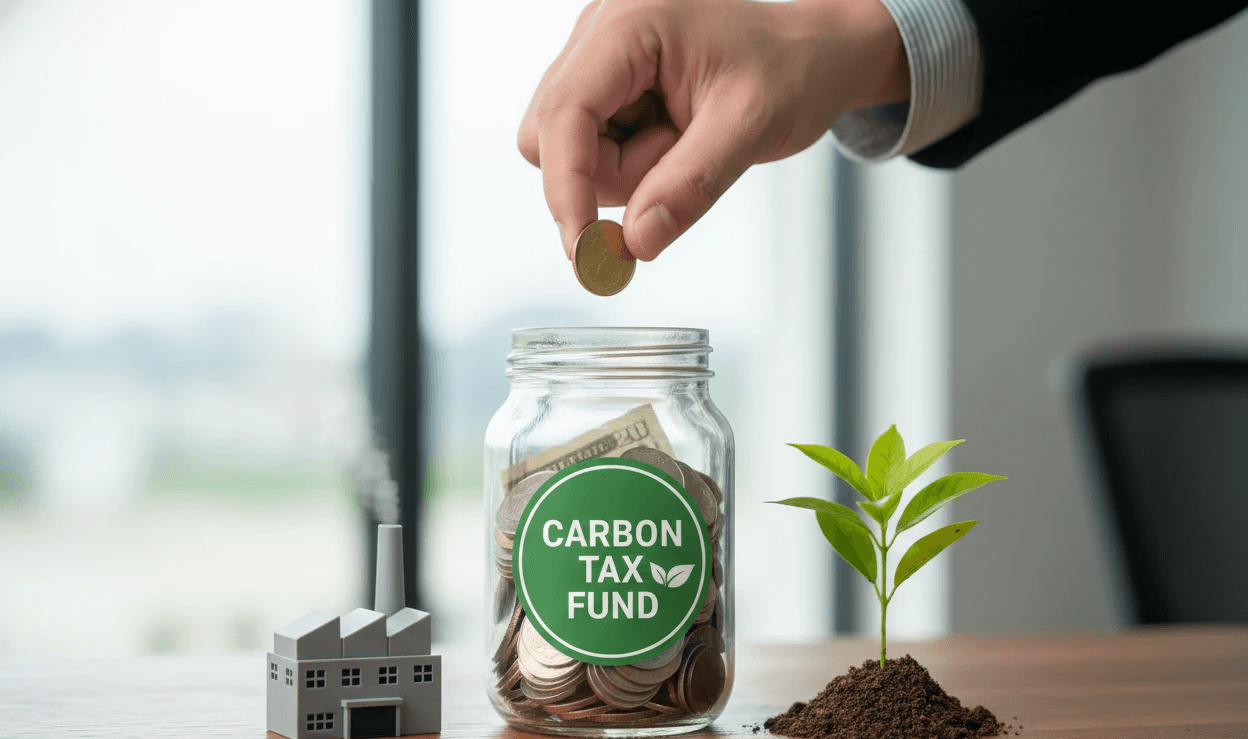
Carbon tax in industry: turning a constraint into a performance lever
The carbon tax in industry has now become one of the most structuring strategic parameters for industrial management. It directly impacts plant profitability, export competitiveness, and the valuation of investments. Its weight in the calculation of production costs keeps increasing, forcing industrial and financial management teams to rethink their approach to performance. By 2026, integrating the cost of CO2 into every operational decision will be crucial to preserve net margin and secure business plans. Carbon intensity management must take place as close to the ground as possible, at the production line level, where economic levers are activated.
This article offers a pragmatic and ambitious vision: to transform the carbon tax in industry into a management variable, thanks to advanced digitalization, intelligent cadence indexing, and systemic resource optimization. Far from being a sacrifice, industrial decarbonization is positioned as a generator of cash flow, a driver of innovation, and operational excellence. Companies that adopt this approach are able to combine regulatory compliance, increased competitiveness, and ongoing reduction in the finished product cost.
Key takeaway: To limit exposure to the carbon tax in industry, manufacturers need to make a strategic shift: move from a pure volume logic to a strategy based on decarbonized flows. Intelligent cadence management, or “Smart Pacing”, makes it possible to control CO2 emissions, avoid energy surges, and eradicate material waste. By aligning the pace of the plant with carbon efficiency indicators, leaders turn a regulatory constraint into a competitiveness lever, ensuring both a reduction in finished product cost and robust compliance with CSRD requirements. This new approach prepares industry for sustainable performance, based on transparency, responsibility, and technical excellence.
1. The new landscape of carbon taxation
EU ETS and CBAM: stricter regulations
The European Union Emissions Trading System (EU ETS) symbolizes a profound shift in industrial governance in Europe. Until recently, many sectors benefited from free allowances, partially cushioning the cost of decarbonization. Now, the revision of the carbon market introduces several major changes: a drastic reduction in free allowances, an accelerated reduction trajectory, and expanded sectoral coverage (gradual inclusion of maritime transport, construction, chemicals, etc.). Each ton of CO2 emitted beyond allowances becomes an immediate financial liability, creating unprecedented pressure on margins.
Added to this is the Carbon Border Adjustment Mechanism (CBAM), designed to ensure fairness between European manufacturers and non-EU imports. The CBAM requires each company to declare and pay the carbon cost of imported products (steel, cement, aluminum, etc.), thus aligning the tax burden across all market players. The sectors concerned see their cost structure deeply disrupted: the cost of carbon becomes as central as material or energy costs.
Ignoring this double regulatory lock exposes companies to a surge in tax costs. Strategies based on traditional flow management or simple productivity optimization are no longer enough. Companies capable of integrating the carbon price signal into their strategic decisions, anticipating regulatory developments, and digitalizing their emissions tracking can secure their competitiveness. Managing the carbon tax in industry becomes a key function of industrial and financial management.
A fixed cost to manage: a challenge for manufacturers
The carbon tax in industry is now a fixed cost line, indexed to the volatility of the CO2 market and the actual performance of industrial processes. This cost, once marginal, is now essential in structuring annual budgets, investment plans, and financial projections. Any deviation from the decarbonization trajectory results in a direct penalty on EBITDA: carbon taxation acts as a loss multiplier for any inefficient or non-optimized production.
For general and industrial management teams, the challenge is twofold: not only must the carbon cost be controlled, but operational flexibility must also be preserved. Peripheral actions—changing suppliers, one-off utility optimization—are no longer sufficient. It is now essential to integrate the carbon price signal throughout the value chain, from energy choices to production flow management, including preventive maintenance and batch scheduling.
Industrial competitiveness now depends on the ability to anticipate CO2 market fluctuations, simulate the tax impact of each operational decision, and adjust production strategy in real time. Digitalization of processes, predictive emissions analysis, and proactive quota management are becoming the new standards of industrial excellence. The carbon tax in industry is driving a profound change in management methods and budget monitoring tools.
Why integrate the cost of carbon into the calculation of production costs?
Integrating the cost of carbon into the calculation of production costs is no longer optional: it is necessary to obtain an exhaustive view of industrial profitability. Each unit produced generates not only material and energy charges but also increasing tax exposure. The cost of CO2, now indexed to emitted volumes and market volatility, can represent several percent of the final production cost.
Underestimating this dimension distorts strategic decision-making. Choices regarding volumes, investments, or energy sources become biased, hiding the risk of seeing net margin erode due to poorly controlled carbon taxation. Integrating the carbon cost allows modeling the tax impact of each scenario, identifying breaking points, and directing decarbonization efforts where the economic lever is maximal.
Companies capable of combining energy management, accurate tracking of emissions (Scope 1 and 2), and real-time arbitration have the keys to turn the tax constraint into a competitive advantage. Integrating the cost of carbon into the calculation of production costs not only secures regulatory compliance but also optimizes operational performance and the value perceived by clients and investors.
2. Correlation between production flows and emissions
The impact of irregular cadence on emissions (Scope 1 and 2)
Any irregularity in cadence on a production line—be it frequent starts and stops or sudden changes in pace—leads to a disproportionate increase in greenhouse gas emissions. Industrial equipment is designed to operate at optimal efficiency points. Exiting this range, even temporarily, generates significant energy consumption and increases the carbon content per unit produced.
Analysis of Scope 1 (direct emissions, related to on-site combustion) and Scope 2 (indirect emissions, mainly electricity) shows a perverse dynamic: flow volatility amplifies utility use, causing major thermodynamic losses. Production peaks, often imposed by delivery targets or commercial constraints, result in a sharp rise in the emissions factor. Conversely, periods of under-cadence or stoppage degrade overall energy efficiency.
The carbon cost thus becomes a leading indicator of industrial efficiency. Companies able to stabilize their flows, anticipate variations, and smooth production structurally limit their exposure to the carbon tax in industry.
Overconsumption of energy and waste: a thermodynamic analysis
Every fluctuation in cadence, even minor, induces energy overconsumption, especially during transitional phases: heating up, pressurization, machine start-up, heating-cooling cycles. These phases overload energy requirements, decrease equipment load factors, and increase maintenance frequency.
From a thermodynamic perspective, loss of efficiency leads to an irreversible increase in the carbon balance. The carbon intensity of the energy used (natural gas, electricity, fuel oil, etc.) amplifies this dynamic: the more carbon-intensive the energy, the more the associated tax cost explodes. Losses linked to non-optimized flow regulation undermine any decarbonization efforts. For site managers, it is therefore crucial to quickly diagnose sources of waste and anticipate transition phases to limit overconsumption.
Proactive management of energy flows, thermodynamic modeling, and digital monitoring of consumption are decisive levers for reducing the impact of the carbon tax in industry and protecting net margin.
Reducing peaks to stabilize the carbon balance
Reducing cadence peaks is part of a global strategy of stochastic optimization. Load smoothing, needs anticipation, and flow stabilization keep industrial equipment as close as possible to its optimal efficiency point, mechanically reducing the carbon content of each unit produced.
This approach requires a revamp of management indicators: carbon intensity joins OEE (Overall Equipment Effectiveness), lead time, and scrap rate as a major parameter for industrial monitoring. Operations management must integrate carbon intensity into dashboards, align production targets with environmental performance indicators, and model the tax impact of each cadence adjustment.
Mastering the carbon tax in industry relies on good flow management, anticipation of bottlenecks, and continuous optimization of production sequences. This approach, based on transparency and data reliability, is essential for sustainable company performance.
3. "Chosen Cadence": an alternative to traditional Lean?
Rethinking production speed based on carbon intensity
With increasing pressure from carbon taxation, the Lean logic—focused on maximizing throughput and minimizing stocks—shows its limits. “Chosen Cadence” offers a radical alternative: replacing the quest for maximum throughput with a dynamic adjustment logic, where production speed is indexed to the availability of low-carbon energy and resource efficiency.
This approach aims to produce at the optimal pace, not only to maximize asset use but also to minimize carbon footprint. Real-time management becomes crucial: it enables modulation of cadence according to variations in carbon intensity of the energy mix (gas, electricity, biomass), saturation of production resources, and level of quota exposure.
Industrial performance is no longer measured solely by quantity produced, but by the carbon quality of each unit off the line. Industrial management must rethink indicators, integrate the carbon price signal into scheduling strategy, and train teams in dynamic cadence management.
Resource optimization and flow regularity
Chosen Cadence relies on double optimization: of material resources (machines, equipment, raw materials) and flows. For example: maintaining laminar production flow, avoiding jerks and overload phases that degrade energy efficiency.
This regularity brings several advantages: stabilized maintenance cycles, reduced utility needs, lower scrap rates, and improved cost predictability. Equipment wear decreases, maintenance schedules lengthen, and installation reliability increases.
But above all, the significant reduction in carbon content per unit produced protects net margin from green taxation. Resource optimization, long perceived as a cost-cutting approach, becomes a global strategy to secure both financial and environmental performance. Site managers have concrete tools to quickly diagnose and solve cadence issues, anticipate bottlenecks, and align local objectives with the company's global strategy.
Operational and environmental benefits of this approach
Adopting Chosen Cadence means combining operational benefits and environmental gains. Flow regularity enables optimal allocation of human and material resources, increased anticipation of bottlenecks, and rigorous control of delivery times.
On the environmental side, reducing consumption peaks and stabilizing energy loads leads to a drop in emissions factor, limiting exposure to the carbon tax in industry. The carbon content of products decreases, regulatory compliance improves, and the company’s value to clients and investors increases.
Net margin is protected by a double dynamic: lower operational costs and reduced tax pressure. The company gains greater resilience to energy market fluctuations, CO2 price volatility, and regulatory changes. The Chosen Cadence strategy, supported by process digitalization and flow optimization, offers a new horizon for industrial and environmental performance.
4. Digitalization and MES: tools to manage carbon impact
MES and energy sensors: real-time management
The convergence between IT and energy management is redefining the standards of operational excellence. The Manufacturing Execution System (MES), enhanced with energy sensors and carbon tracking modules, has become the essential tool for modern industrial management.
Thanks to the integration of real-time energy data, each unit produced is assigned a complete production cost, including the carbon component. This granular management allows for immediate arbitration: adjusting cadence, modifying production sequences, switching to less carbon-intensive energies. Operations managers have unprecedented visibility on their levers for reducing the carbon tax in industry.
MES connected to energy sensors instantly identifies points of overconsumption, anticipates transition phases, and optimizes asset use. Industrial leaders can thus steer environmental and financial performance with reliable, transparent, and continuously updated data.
Anticipating production costs through carbon cost integration
Integrating the carbon cost into MES provides an unprecedented ability to anticipate. Each scheduling scenario can be evaluated not only in terms of material cost or machine time, but also the carbon price signal. Industrial management teams become true strategists, able to simulate different trade-offs depending on low-carbon energy availability, SEQE-UE quota saturation, or CO2 market trends.
Digital carbon tracking makes it possible to anticipate the tax impact of production choices, secure regulatory compliance, and optimize investment profitability. Production scenarios are modeled in real time, integrating all parameters (energy flows, cadence, scrap rate) and allowing for the selection of the most effective strategy.
Digitalization becomes a competitive lever, securing net margin in the face of CO2 price volatility and aligning environmental performance with the company’s financial objectives.
Operation Optimizer: the Dillygence solution for flow control
Operation Optimizer, developed by Dillygence, embodies this new generation of industrial management tools. This solution, currently intended for industries with low diversity and high volumes, integrates production flow management, bottleneck analysis and resolution, and simulation capability with impact on plant efficiency. Here we address the flow management aspect.
Thanks to the aggregation of client data, Operation Optimizer enables instant decision-making based on the physical reality of the site. Site managers can simulate the impact of each cadence adjustment or line reconfiguration on the overall efficiency of the plant.
5. Crossed ROI: combining environmental and financial performance
Reducing tax exposure and improving EBITDA
Reducing exposure to carbon taxation directly and measurably translates into improved EBITDA. By stabilizing production flows, optimizing energy consumption, and controlling the carbon content of products, the company reduces the volume of quotas to purchase or tax to pay.
Every euro saved on green taxation feeds net margin, strengthening investment capacity and competitiveness. This crossed ROI—environmental and financial—places decarbonization at the heart of the industrial growth strategy. General management thus gains a new argument for undertaking profound transformations, justified by their immediate impact on overall performance.
Mastering the carbon tax in industry becomes a growth driver, a tool for differentiation, and a guarantee of resilience in the face of market, regulatory, and client expectation changes.
Stabilizing operational costs in the face of energy fluctuations
Faced with the structural volatility of energy and carbon prices, stabilizing operational costs is a decisive competitive advantage. By indexing production cadence to the carbon intensity of the energy mix, the company absorbs price increases without degrading profitability.
The Chosen Cadence strategy, supported by digitalization and (for example, stochastic) flow optimization, offers unprecedented resilience: fixed costs stabilize, budget predictability increases, and net margin stability becomes a reality. Industrial companies become less vulnerable to external shocks, whether from the CO2 market, geopolitical tensions, or regulatory developments.
Proactive management of the carbon tax in industry asserts itself as a key factor for industrial sustainability, securing growth, investment, and company valuation over the long term.
Creating a resilient industry through optimized carbon strategy
The combination of environmental and financial performance offers a new model of resilient industry, able to navigate regulatory and economic uncertainty. The optimized carbon strategy, based on integrating the CO2 cost into every production decision, reconciles profitability and responsibility imperatives.
This approach is based on concrete tools—like Operation Optimizer—as well as management of flows and cadence. Industrial companies capable of adopting this model position themselves as market leaders, mastering tax exposure, securing their EBITDA, and enhancing their reputation with clients and investors.
The carbon tax in industry ceases to be a burden and becomes the engine of a profound transformation, accelerating the transition to a sustainable, competitive, and resilient industry. Companies that take up this challenge demonstrate their ability to innovate, adapt, and generate a positive impact for both their profitability and the environment.


