
Dillygence
Production flow simulation: model, don't guess anymore
Production flow simulation: reject blind management, expose hidden bottlenecks and guarantee the long-term profitability of your factories.
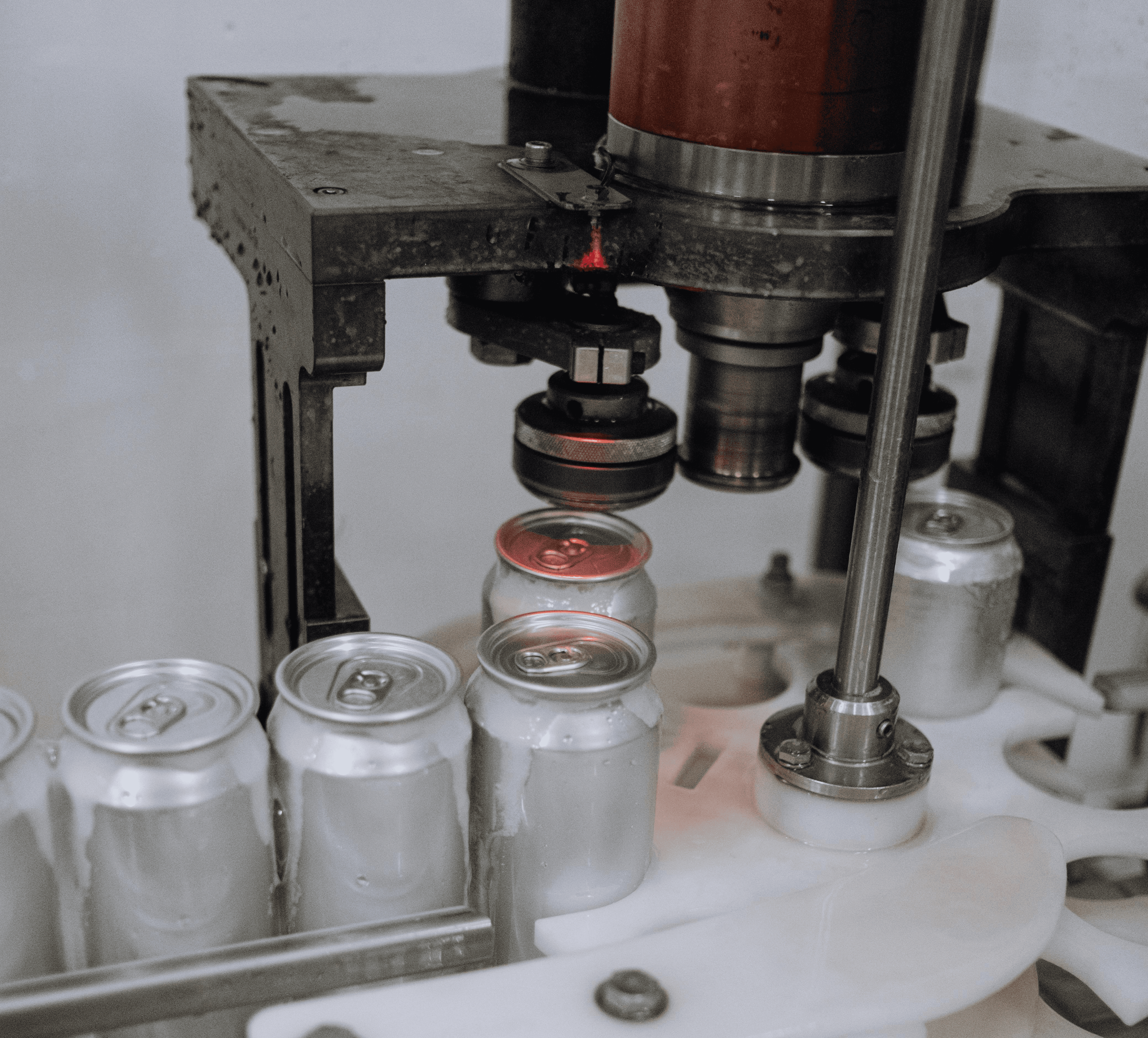
Production Flow Simulation: The Managerial Mistake of Intuition
Introduction: Production Flow Simulation and Industrial Transformation
Contemporary Challenges: Increasing Complexity and Uncertainty
It is clear that managing a factory, designing a new line, or embarking on an industrial transformation means navigating through a fog of uncertainties. Modern industry multiplies the variables: changing product mix, volatile demand, fluctuating regulatory requirements, and constant pressure on profitability. Every investment decision is a high-stakes act of governance. Yet, these multimillion-euro decisions are often based on intuitions, superficial benchmarks, or simple spreadsheets unable to grasp the real dynamics of a system. Limiting oneself to these tools means ignoring the systemic complexity of today's value chains. The leader who relies on intuition exposes their organization to major risks, often invisible but potentially devastating. Production flow simulation thus emerges as a concrete response to this complexity, providing a clear and structured view of interactions and risks.
How Leaders Can Optimize Their Strategic Decisions
Unlike approximate management, rigor stands out as a factual path. The era of blind decision-making is over: it is now vital to adopt an approach based on dynamic modeling. Production flow simulation thus becomes a governance imperative. It reveals hidden risks, anticipates the non-linearity of reactions, and objectifies the selection of industrial investments. Every strategic decision should integrate production flow simulation as a safety net, ensuring the robustness and profitability of operations. Leveraging production flow simulation means turning uncertainty into a competitive advantage.
I. The Challenges of Decision-Making in a Complex Industrial Environment
Multiplication of Variables: Interdependencies and Feedback Loops
From this perspective, the exponential increase in variables to consider disrupts the managerial paradigm. A change in product mix or a supply chain disruption can trigger chain reactions. The domino effect in an industrial environment is not fiction, but daily reality: a single bottleneck can paralyze an entire workshop, harming profitability. The interdependencies between lines, workshops, inventories, and suppliers create a complex fabric where every local decision can generate unforeseen feedback. The direct consequence: intuition-based management becomes perilous, unable to anticipate these cascades of effects. Production flow simulation enables anticipation and control of these interactions, providing enlightened management.
System Non-Linearity: Limits of Human Capabilities
By contrast, the human brain, even guided by experience, remains limited when facing the non-linearity of modern systems. The accumulation of interactions and the volatility of flows quickly exceed the instinctive calculation capacities of decision-makers. Without a dynamic model, how can one anticipate sudden amplifications or saturation phenomena? Intuition becomes a cognitive bias, creating an illusion of control where uncertainty reigns. Only production flow simulation, through Digital Twin technology (which may sometimes require Discrete Event Simulation - DES), allows these limits to be surpassed and provides an objective understanding.
II. The Risks of an Approach Without Simulation
Unforeseen Effects on Flows: Saturation and Inefficiency
Furthermore, ignoring simulation opens the door to unforeseen effects on production flows. Capacity saturations occur without warning, productivity collapses, customer promises are broken, and overall industrial performance is weakened. The domino effect is in full force: a saturated workshop penalizes the entire chain, causing delays, useless inventory accumulation, and a loss of operational flexibility. Teams find themselves under pressure, forced to manage emergencies at the expense of continuous improvement. Without modeling, these dysfunctions are neither anticipated nor corrected before becoming critical, generating hidden costs and undermining the company's competitiveness. Integrating production flow simulation allows for rapid, root-cause resolution—or even prevention—of these unforeseen effects and improves operational fluidity.
Structural Consequences: Inadequate Installations
Conversely, the decision to invest in oversized facilities stems directly from a lack of simulation. Static benchmarks do not capture the ever-changing reality of a modern workshop. The risk is ending up with unused equipment or a factory unable to ramp up. The resulting structural rigidity eliminates adaptability, locking the organization into an obsolete framework. Production flow simulation ensures accurate sizing and increased agility.
Financial Impact: Avoiding Investment Traps
From this angle, the trap is financial: committing (tens of) millions of euros in CAPEX based on rough estimates exposes capital to irreparable destruction. Without production flow simulation, hidden costs proliferate rapidly: extra costs from unexpected bottlenecks, extended time-to-market, inability to pivot quickly in response to market changes, and expensive resource reallocations. Sizing errors go unnoticed until they become structural, undermining profitability. The ROI of flow simulation collapses, turning investment into a financial sinkhole and weakening long-term competitiveness. Rigorous production flow simulation helps avoid these traps and secures investments.
III. Deciding Without Simulation: Limited Visibility on Risks
Economic Consequences: Financial Losses and Compromised Profitability
It is clear that the absence of a simulation tool deprives leaders of objective and factual visibility on risks and opportunities. Financial losses take many forms: unnecessary inventory, hidden costs, poorly sized investments, or underutilized assets. This lack of anticipation is not just financial: it harms profitability, as every euro invested loses effectiveness and impact. In the long run, industrial performance stagnates or even regresses, sustainably eroding competitiveness and the company's ability to adapt to market changes. Production flow simulation restores this visibility and maximizes the profitability of decisions.
Operational Consequences: Inefficiency and Bottlenecks
Unlike a high-performing organization, inefficiency becomes the norm: bottlenecks appear, teams spend their time managing emergencies and shifting priorities, exhausting their energy on reactive tasks instead of sustainable initiatives. Key KPIs slip, productivity wanes, customer satisfaction suffers, and innovation capacity weakens. Only an approach based on Simulation (including Discrete Event Simulation) provides a structured response, anticipating bottlenecks and offering a framework for managing production flows with precision and reliability.
Human Consequences: Overload and Organizational Tensions
The first victims of this limited visibility are the teams. Work overload, constant stress, and a sense of powerlessness: the human factor pays a high price for the absence of production flow simulation. When flows are not controlled, employees face repeated emergencies, have to compensate for disruptions with overtime, and see their motivation decline. The organization, under continuous strain, sees its talents exhausted, individual initiatives dwindle, and collective engagement unravel. Yet, securing ramp-up requires protecting human capital, which only a dynamic model and reliable flow anticipation can orchestrate over time. Production flow simulation acts here as a lever for organizational peace of mind.
Strategic Consequences: Lack of Agility in the Face of Change
From this perspective, the strategic risk is significant: without simulation, the company becomes locked in a rigid logic, unable to adapt. Lack of agility becomes a brake on growth. Modern governance requires integrating production flow simulation as a decision-support tool, ensuring resilience and competitiveness.
IV. Simulation as a Lever for Decision-Making and Investment
Evaluate Different Scenarios and Anticipate Future Impacts
Rather than improvisation, the rigor of modeling offers an unprecedented decision-making power: the ability to evaluate different scenarios and measure their future impacts. The Digital Twin allows you to test each configuration, anticipate ramp-ups, and optimize performance. Far from being a technical gadget, production flow simulation becomes the decision-maker’s weapon, revealing viable options and eliminating false good ideas.
Decline With Discernment: Avoid Nonviable Projects
The great strength of production flow simulation lies in its ability to provide the power to decline: saying no to a risky investment before it's too late. It secures capital and helps avoid nonviable projects. Deciding not to invest, based on factual analysis, becomes an act of informed governance.
Secure Profitable Choices in the Long Term
The ultimate benefit of production flow simulation is securing profitable choices over time. By providing precise visibility on ROI and validating scenarios, simulation allows CAPEX commitments with confidence. The leader, thus equipped, turns risk-taking into a growth driver. Dillygence positions itself as the guarantor of decision-making robustness, offering a digital twin solution based on production flow simulation.
V. Overcoming Cultural Barriers and Preconceived Ideas
Clarify Added Value: Beyond Preconceptions
Furthermore, the main barrier lies in the persistence of preconceived ideas: simulation is for experts or is too complex. This perception hides reality: production flow simulation is above all a governance tool, a strategic lever, not a mere technical accessory. Clarifying this added value means reminding that every euro invested in simulation results in risk reduction and ROI optimization.
Avoid Confusion: Differentiate Simulation and Design Tools
It is important to avoid confusing simulation with conventional design tools. CAD solutions neither capture real dynamics nor the non-linearity of interactions. Only production flow simulation in all its dynamic aspects can model operational behavior and reveal invisible blind spots. Neglecting this distinction leads to major management errors.
Position Simulation at the Heart of Industrial Strategies
From this perspective, transformation must occur at the governance level: production flow simulation must become a reflex, a prerequisite before any major engagement. Positioning production flow simulation at the heart of strategy is about raising the bar and ensuring resilience in the face of future challenges. Dillygence supports this paradigm shift with multidisciplinary expertise, particularly in production flow simulation.
Conclusion: A New Era for Industrial Decisions
Adopt Simulation as a Governance Pillar
It is clear that industrial governance can no longer be satisfied with approximations. Production flow simulation is now established as the central pillar of strategic decisions. Adopting production flow simulation means choosing rigor, innovation, and managerial responsibility.
Refusing to Simulate: An Avoidable Risk in Modern Challenges
Unlike bold risk-taking, refusing to simulate exposes you to unnecessary risk. Those who refuse production flow simulation before investing do not show courage, but negligence in the face of modern challenges. Dillygence is committed alongside leaders to make production flow simulation the standard for industrial governance, guaranteeing sustainable performance and enduring growth.


