Industrial productivity: the winning trio Lean, Digital, KPI

Industrial productivity: steering value beyond volumes
Industrial Productivity: Driving Value, Debunking the Illusion of Volumes Alone
Industrial productivity, far from being limited to a mere question of pace or a reductive obsession with volume, now represents the strategic turning point for any manufacturing company seeking to sustainably consolidate its competitiveness and maximize its intrinsic profitability.
In the most demanding manufacturing sectors, every square meter used, every hour of work actually invested, and every resource consumed must necessarily translate into superior and identifiable value creation. The organizational capacity to efficiently transform all available resources—whether labor, technological equipment, materials, or energy—into tangible and measurable added value becomes the ultimate safeguard against structural waste and latent inefficiency.
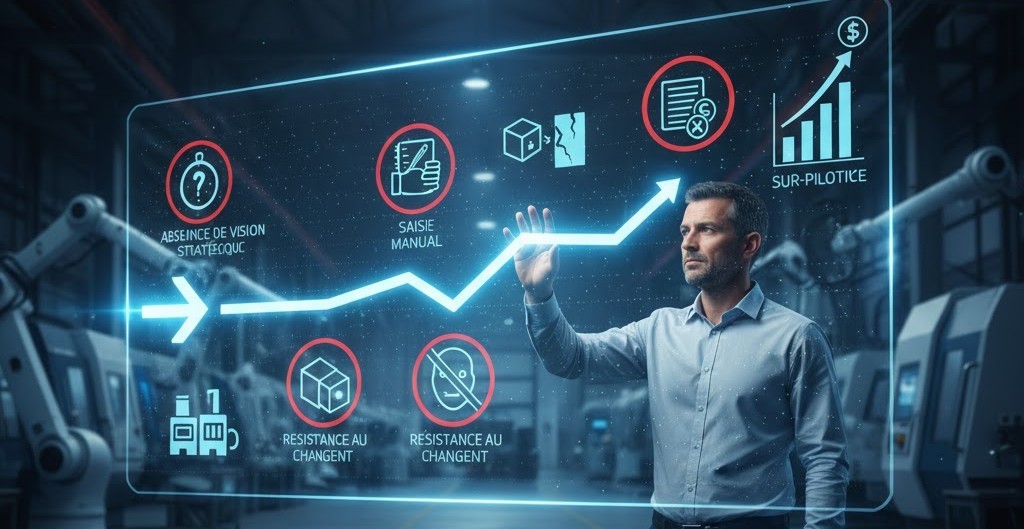
Leaders, industrial directors and plant managers are now faced with a radically new challenge: the pursuit of performance gains no longer tolerates improvisation or a fragmented, partial approach. On the contrary, it requires rigorous and systemic orchestration of all flows, the strategic—not decorative—integration of cutting-edge technologies, as well as sharp governance of truly relevant performance indicators.
Today’s industrial environment, marked by the relentless acceleration of production cycles, permanent and increasing pressure on margins, the deep and rapid shift in customer expectations, and the non-negotiable requirements linked to environmental sustainability, demands a complete and immediate reinvention of productivity management. Far from being a mere budgetary adjustment variable, productivity becomes the fundamental lever to secure growth, the key factor in resilience against market fluctuations, and the tool to optimize the return on investment of committed capital.
This dossier aims to decipher the essential three-way synergy between the structured methodology of Lean Management, the game-changing digital tool such as the Digital Twin, and the continuous measurement of performance through Key Performance Indicators (KPIs). Together, these three pillars enable industrial productivity to be steered towards true operational excellence 4.0: a discipline where every decision is justified by data, every improvement is rigorously quantified, and every technological innovation is secured before deployment. The ultimate goal is to provide industrial decision-makers with the insights and tools to transform their production sites into real engines of economic performance and environmental sustainability, while mastering the complexity of inherent risks and maximizing every euro of invested capital.
Lean Management: The Strategic Foundation for Sustainable Industrial Productivity
The philosophy of Lean Management is not just a technical streamlining process or a management fad; it embodies the cultural foundation and organizational framework upon which any legitimate ambition for sustainable and lasting industrial productivity rests. Since its origins in the Japanese automotive industry, Lean has established itself as the undisputed methodological benchmark for structuring operational excellence around five fundamental principles: focusing on customer-defined value, mapping value streams for transparency, streamlining production by eliminating bottlenecks, pulling demand rather than pushing supply, and aiming for continuous improvement (Kaizen). This methodological framework transcends sectors and adapts with proven effectiveness to industries as complex and diverse as automotive, aerospace, rail, space or naval sectors.
The inherent strength of Lean lies in its ability to transform an initially reactive organization, often overwhelmed by urgency management and process complexity, into a proactive, agile, and resilient structure in the face of external shocks. Market volatility and the growing complexity of supply chains have become an everyday operational reality, and Lean provides field teams and managers with conceptual and practical tools to anticipate, act factually, and make progress based on measurable results. Adopting Lean, far from being a mere trend, is part of a structuring approach that fundamentally prepares the organization to absorb systemic shocks and seize uncertain growth opportunities. This substantially increases the reliability of production operations and, as a result, significantly strengthens overall industrial productivity.
At the heart of Lean doctrine, the exhaustive identification and systematic elimination of the seven canonical forms of waste (overproduction, waiting, unnecessary transport, excess inventory, unnecessary movements, unnecessary processes, defects) constitute the primary lever of efficiency for improving industrial productivity. These wastes represent so many value leak points, mobilizing precious resources without generating real benefit for the end customer or for company profitability (hidden costs). Lean methodological tools, such as Value Stream Mapping (VSM), SMED (Single-Minute Exchange of Dies) for changeover time reduction, Kanban for pull flow management, or the 5S Method for workstation organization, allow each process step to be analyzed in detail, dysfunctions to be objectified, and corrective actions to be managed in a continuous Kaizen logic—incremental and ongoing improvement of industrial productivity.
When applied with rigor and discipline, the Lean approach dramatically transforms industrial daily life: it significantly reduces production lead times, lowers structural costs, and increases final product quality. It also optimizes the use of scarce resources, improves operator safety, and increases team engagement through greater accountability around industrial productivity issues. The results of this transformation are visible and measurable in the ability to deliver on time (On-Time Delivery), quickly adapt to sudden demand changes, and integrate new technologies without causing major disruptions to existing production.
The impact of Lean, measured precisely in the field, is immediate and lasting. For example, equipment reliability through Total Productive Maintenance (TPM), directly inherited from Lean, can increase Mean Time Between Failures (MTBF) by more than 50% in many documented industrial cases. This increase in operational uptime directly results in a substantial rise in overall industrial productivity, a drastic reduction in unplanned downtime, and measured optimization of capital invested in equipment. In addition, the Lean approach promotes healthier and leaner inventory management, a notable reduction in scrap, and improved customer satisfaction, thereby strengthening the company's competitive position.
The benefits do not stop at these primary indicators: consistent application of Lean creates a virtuous circle where each continuous improvement action feeds overall performance and industrial productivity. Field teams become inherently able to quickly diagnose complex problems, propose suitable solutions, and lead improvement projects with measurable impact on key KPIs (OEE, scrap rate, cycle time, etc.). Lean thus becomes the essential starting point and methodological thread of any ambitious industrial transformation, centered on the imperative of industrial productivity. The Lean requirement is illustrated by the systematic use of concrete and proven tools, such as the "5 Whys" method to identify root causes, the PDCA cycle (Plan, Do, Check, Act), or the A3 format, which structures problem-solving in a visual and concise manner. This methodological discipline ensures that every initiative, every technology investment decision, is fully embedded in the company’s overall vision and strengthens both value generation and industrial productivity. It also prepares teams and processes to integrate major technological innovations such as the Digital Twin. Indeed, any digital advance only amplifies the efficiency of an already established and reliable system: the pursuit of operational excellence through Lean is therefore the essential basis to unlock the full potential of augmented industrial performance. Lean is not a passing trend but the solid and proven benchmark for building multiplied and sustainable industrial productivity. It guarantees controlled growth, enhanced adaptability, and effective, responsible resource management, in a logic of collective excellence.
II. The Digital Twin: Catalyst for Operational Breakthrough
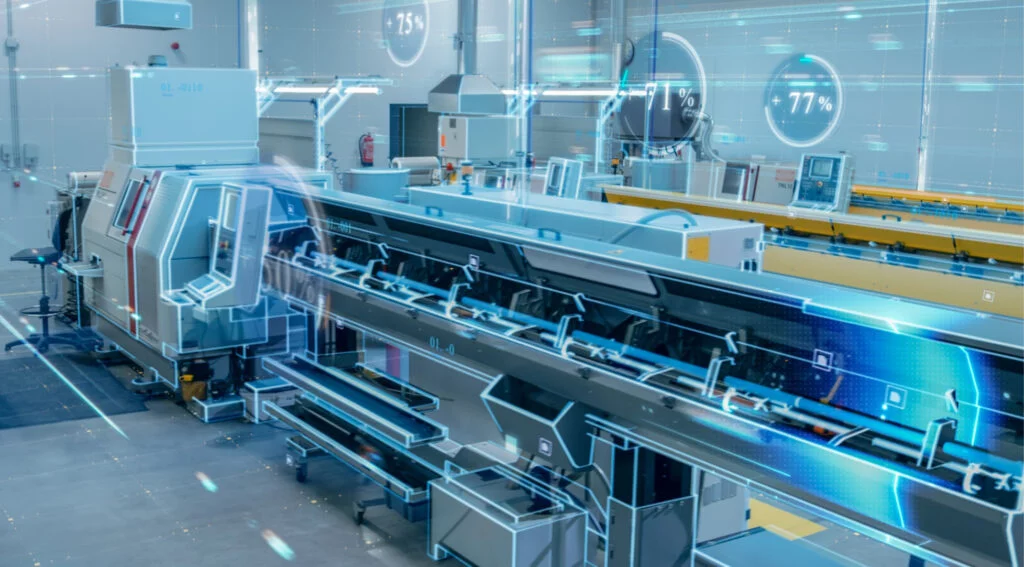
The Digital Twin is now emerging as the catalyst for a radical transformation in the approach and management of industrial productivity. It is a dynamic and faithful virtual replica of the real industrial environment—including facilities, machines, material flows, processes, and human interactions—fueled by data (real-time or not) from IIoT (Industrial Internet of Things), MES (Manufacturing Execution Systems), and supervision. This living digital model makes it possible to simulate, anticipate failures, optimize performance, and manage every conceivable improvement scenario, without exposing the real site to unjustified operational or financial risks.
The value of the Digital Twin goes beyond simple visualization: it becomes a true virtual testing lab, where every strategic hypothesis—layout modification, introduction of new equipment, critical pace change, process parameter adjustment—can be tested, simulated, and precisely quantified in terms of impact on overall factory output.
This ability to experiment risk-free opens up major strategic prospects: anticipation of production drift, instant identification of bottlenecks, proactive and predictive maintenance management, and targeted optimization of energy consumption. Dillygence client cases show productivity improvements exceeding 40%, output gains reaching nearly 12 percentage points, and stock reductions of almost 80% in complex environments. Studies by the Capgemini Research Institute highlight the power of this technology. Its integration into industrial sites improves operational performance by an average of 25%, reduces energy consumption by up to 20%, and cuts unplanned downtime by 50%. These figures show the direct and massive impact on profitability, equipment availability, and the robustness of manufacturing processes. The Digital Twin thus becomes an investment security tool, enabling every major decision to be validated on simulated, measured, and transparent bases.
Integrating the Digital Twin into the industrial approach also meets a major challenge of the 4.0 era: the irreversible shift from hands-on, intuitive management reliant on experience to data-driven management, steered by algorithmic data analysis and intelligent simulation. Industrial companies, from SMEs to large multinationals, now have a common, visual and factual reference framework to make collaborative decisions, align field, process and IT teams, and accelerate the collective upskilling of organizations. Smart digitalization, embodied by the Digital Twin, transforms industrial management into a responsible, transparent and results-driven discipline.
Contrary to a limiting misconception, the Digital Twin is not reserved for technological elites or large groups with massive budgets. Depending on the technology used, it can adapt flexibly to the digital maturity of each site, whether an existing factory seeking fine-tuned optimization or a new installation to be designed ex nihilo. Its modularity allows progressive deployment of features, integrating sensors, data collection, and simulation at the pace of strategic objectives and operational constraints. The Digital Twin acts as an accelerator of the Lean approach, turning each improvement iteration into a measurable, reproducible, and totally secure continuous improvement cycle. By putting intelligent simulation and data at the heart of industrial productivity, the Digital Twin encourages interdisciplinary collaboration, cross-functional expertise, and fine alignment with strategic goals. It also makes it possible to anticipate the integration of new technologies (automation, robotics, industrial AI), secure their deployment, and minimize operational risks, while ensuring compliance with regulatory and environmental requirements. The challenge of transformation thus becomes a collective progress opportunity, where every industrial player has the tools needed to steer their site toward operational excellence 4.0.
III. KPIs: Data Governance and Strategic Alignment
KPIs (Key Performance Indicators) are the essential management tools for effective industrial productivity. They translate the company’s overall strategy into concrete, measurable, and shareable objectives, enabling all stakeholders to align with priorities and expected results. In the Lean approach, KPIs serve to precisely quantify waste, prioritize the order of actions to be taken, and measure the real impact of implemented improvements. Structuring indicators such as OEE (Overall Equipment Effectiveness), scrap rate, cycle time, equipment availability, or compliance rate are all levers to manage industrial performance with surgical precision.
The relevance of KPIs fundamentally lies in their ability to accurately reflect operational reality, objectify progress, and secure costly investment decisions. When rigorously tracked, KPIs become powerful continuous improvement tools, factual reference points for teams, and guarantees of transparency and reliability of results. They also make it possible to quickly detect unwanted deviations, anticipate failure risks, and efficiently capitalize on identified best practices, in a logic of sustainable performance.
The contribution of the Digital Twin to data and KPI governance is absolutely decisive. Data integration, for example via IIoT sensors and connected systems, makes every performance variable accessible and analyzable at any time. Ultra-fast visualization and analysis facilitate early trend detection, root cause identification, and rapid, justified decision-making. Virtual simulation offers the invaluable opportunity to test the precise impact of each action on targeted KPIs, before any real-world deployment, which greatly secures the investment and minimizes operational risks. The statistics are telling: 81% of industrial companies consider that the Digital Twin significantly improves equipment availability and reliability. Moreover, 75% believe it optimizes value from the design phase, proving that data governance from the outset is an undeniable key success factor. This data-driven approach strengthens organizations’ ability to manage performance, anticipate future needs, and integrate innovation responsibly and safely. Rigorous KPI management avoids “blind” optimizations or risky investments based on guesswork. It structures the continuous improvement approach and guarantees perfect alignment between the company’s strategic ambition (growth, sustainability, profitability) and the concrete operational reality on the ground. KPIs become the vital link between long-term vision and daily action, between overall strategy and measurable concrete results. They foster accountability, transparency, and reliability—central elements for building sustainable and distinctive industrial performance.
IV. The Effective Combination: The Orchestration Triptych
The synergistic combination of Lean, Digital Twins and KPIs forms a highly effective triptych capable of radically transforming the approach to industrial productivity. This synergy is based on a structured and transparent approach in three interdependent phases:
Lean Sets the Course: In-depth flow analysis through Lean methodology enables the selection of clear, strategic, and relevant KPIs, setting objectives and precisely identifying waste, malfunctions, and priority leverage points for continuous improvement. The Digital Twin Accelerates Discovery: The virtual model simulates improvement scenarios—layout modification, workstation balancing, integration of new equipment, adjustment of paces or intermediate stocks—and precisely measures the impact of each action on KPIs. This approach avoids the costly pitfall of digitizing waste: it allows processes to be optimized and streamlined before any real deployment, ensuring the effectiveness and profitability of technological investments. KPIs Validate Deployment: Strategic decisions and investments are guided by objective results from virtual simulations and real-world measurements. KPIs serve as factual benchmarks to manage deployment, track impact, and adjust actions in real time if necessary.
Adopting the Lean, Digital Twin and KPI trio transforms industrial productivity into a sustainable and scalable performance lever. This intelligent orchestration provides teams with concrete, shared tools to perfectly align strategy, operations, and innovation. Industrial sites gain in resilience, exchange of expertise, and collective innovation capacity. Value created per square meter is maximized, time-to-market is accelerated, available production capacities are increased, and both costs and carbon footprint are reduced. Sustainable industrial performance is built on operational excellence and flawless data mastery.
Conclusion: Operational Excellence 4.0, a Discipline for the Future
It is no longer an option today.
Industrial productivity now imposes itself as a discipline of strategic orchestration, combining the power of data analysis, flow analysis methodology, and predictive virtual simulation. The synergistic integration of Lean, the Digital Twin, and KPIs structures a resolutely results-oriented approach, securing investments and generating real value creation for the company. This proven approach makes it possible to halve unplanned downtime, increase equipment reliability by more than 50%, and optimize energy consumption by up to 20%. The gains are measurable in the financial statements: significant improvement of EBITDA, lasting reduction of structural costs, and enhanced capacity to absorb unforeseen market fluctuations. Industrial productivity, driven by operational excellence, transforms the daily lives of leaders, industrial directors, and site managers. It structures the approach, empowers teams, and aligns growth with technological, economic, and environmental challenges. Tomorrow’s industry values collective intelligence, multidisciplinary innovation, and KPI mastery to build sustainable and lasting competitiveness. Adopting this orchestration discipline means turning every challenge into a measurable growth opportunity and placing industrial productivity at the heart of the company's strategic success.